Petra in southern Jordan is a compact region built around the Nabataean rock-cut city and nearby canyons, distinct from Amman’s urban scale or the wide-open desert of Wadi Rum. It deserves a place in a multi-day itinerary because its main routes, viewpoints, and side valleys take sustained walking rather than a quick photo stop.
The area is best for active travelers who prioritize archaeology and rugged scenery over city attractions. Petra usually sits at the core of a Jordan route, slotted between time in Amman and the Dead Sea to the north and Wadi Rum or Aqaba to the south.
Why visit Petra?
Petra offers the rare experience of walking through a sheer-walled sandstone canyon and emerging face to face with a city carved directly into the rock. Nowhere else in Jordan combines such dramatic natural geology with monumental facades, stairways, and hidden shrines on this scale.
As you move beyond the famous Treasury, you can climb ancient processional routes to the High Place of Sacrifice, follow quiet back trails past eroded tombs, and sit on the weathered steps of the theatre while the cliffs shift color with the light. Moving through the Siq at different times of day feels almost choreographed, the walls narrowing and opening to reveal new vistas.
You leave Petra with the physical memory of having threaded through a sandstone maze and discovered an entire carved city by walking its paths, rather than just viewing isolated ruins.

Petra, Jordan
Who is Petra best for?
You'll probably enjoy Petra if you like full days on your feet, following trails rather than fixed schedules, and getting absorbed in ancient history. Curious first-time visitors to Jordan who are happy to walk several miles a day tend to get the most from Petra’s viewpoints and side paths.
It also works particularly well for photography-minded travelers, active couples, and solo visitors who value time to explore at their own pace instead of jumping between many different stops.
You may prefer another destination if you want a resort-style break with pools, nightlife, or beach time at the center of your trip. Families with very young children, or anyone who dislikes long walks and uneven paths, often find other Jordan stops such as the Dead Sea or Aqaba more comfortable.
Another destination may also be a better fit if your ideal holiday is built around shopping, dining, and urban culture rather than landscapes, hikes, and archaeological sites.
How does Petra fit into an itinerary?
Petra usually anchors the middle section of your time in Jordan, often following Amman and the Dead Sea and leading on toward Wadi Rum or Aqaba. Most travelers arrive by road from the north, spend one to three nights, then continue south rather than looping back, which keeps the route flowing in a single direction. Building Petra into a linear north-south journey helps balance city time, desert scenery, and coastal relaxation without constant backtracking.
Because the archaeological area rewards full days on foot, time here naturally slows the pace of your plans. Many visitors stay two nights to allow one or two full days inside Petra with evenings in nearby Wadi Musa, then regain momentum by driving on to Wadi Rum or further south.
Petra works best as a dedicated stop on a broader road trip, not as a rushed day visit or a long-term base, so it typically occupies a focused section of your itinerary within a wider Jordan route.
Trips that include Petra
The Classic Jordan tour with Petra and Wadi Rum combines Jordan's ancient landmarks with its striking natural landscapes. After exploring Jerash and the Dead Sea, travelers arrive in Petra, entering through the narrow Siq to discover the famous Treasury. The visit continues to the Street of Facades and the ancient Theater, revealing more of the city's remarkable Nabataean heritage.
The tailor-made honeymoon in Jordan offers couples the chance to explore Petra's most celebrated sights, from the winding Siq to the magnificent Treasury. For those seeking a more adventurous experience, hikes to the Monastery or the High Place of Sacrifice reveal impressive views of Petra's sandstone landscape.
The Jordan cultural tour with Ajloun, Petra and Wadi Rum takes a different approach, entering Petra via a quieter back route before exploring highlights such as the Roman Theater and Royal Tombs. This alternative route offers a different perspective on the ancient city and its surrounding landscapes.
Our local experts can help personalize your Petra experience with additional activities, such as a traditional dinner near Little Petra, offering an opportunity to enjoy Jordanian hospitality and local cuisine in a memorable desert setting.
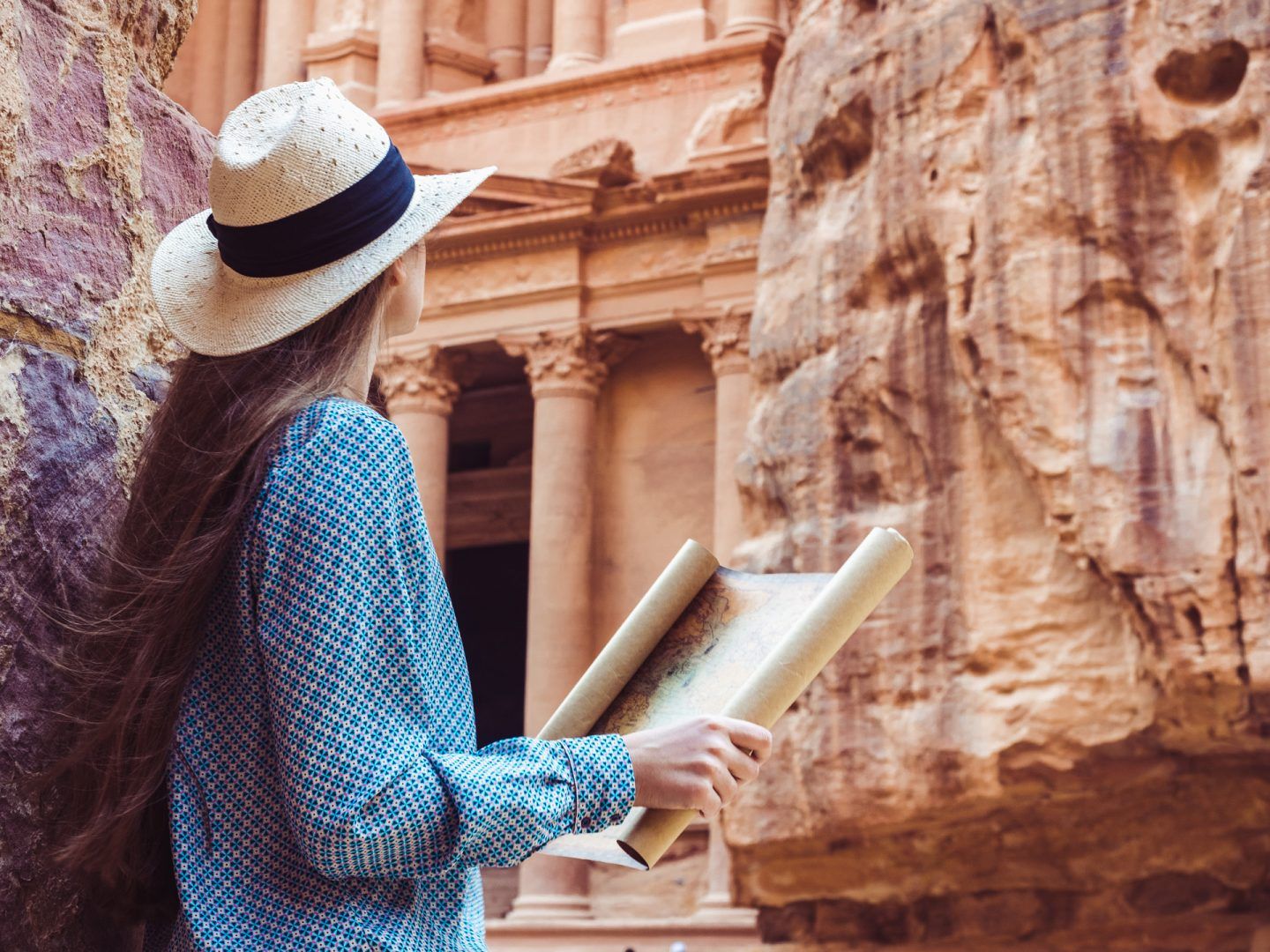
Petra, Jordan @ Shutterstock
How many days do you need?
Most travelers dedicate one to three full days to Petra itself, balancing time on the main monuments with quieter trails and rest in Wadi Musa. Rather than hopping between multiple towns, you vary your days by routes: one focused on the classic Siq approach and major facades, another on viewpoints and side canyons, and an optional third on lesser-visited paths or a back-door entry.
| Days | Suggested route | Ideal pace |
|---|---|---|
| 1 day | Siq, Treasury, Street of Facades, Theatre, Royal Tombs, return the same way | Highlights only, long but focused walking day |
| 2 days | Day 1 classic route; Day 2 Monastery and viewpoints via alternative trails | Balanced: time for photos, breaks, and varied paths |
| 3+ days | Above plus back-door hikes, High Place of Sacrifice, and quieter outskirts | Unhurried: ideal for keen walkers and photographers |
Extra days let you explore more viewpoints, longer hikes, and different light conditions without compressing everything into a single exhausting push.
Best region combinations
Petra pairs naturally with other distinct regions in Jordan. A classic route is Amman - Dead Sea - Petra - Wadi Rum, giving a mix of city history, salt-lake relaxation, rock-cut ruins, and desert camping over 7-10 days. This suits first-time visitors wanting variety without rushed transfers.
Another popular loop is Amman - Madaba - King's Highway viewpoints - Petra, ideal for travelers who enjoy scenic drives and smaller towns.
Those seeking both ruins and the Red Sea often travel Amman - Petra - Wadi Rum - Aqaba, combining hiking with snorkeling or diving.
For a slower pace, consider two nights at the Dead Sea before Petra, then end with a quieter night in Dana or Shobak, which works well for couples and older travelers who prefer shorter driving days.
When is the best time to visit Petra?
Spring, from March to May, and autumn, from late September to November, are among the best times to visit Jordan for exploring Petra. These seasons offer the most comfortable mix of temperatures and daylight for long walks through its canyons and stairways. Trails are busy but manageable, and early starts and late-afternoon finishes bring gentler light and thinner crowds.
Summer brings intense heat, so Petra works best for early risers who prioritise dawn and evening visits, with midday breaks in Wadi Musa. Winter is cooler and can be wet or windy on exposed ridges, but rewards travellers who value quieter paths and softer light over predictable sunshine.
Local experts can adjust routes by season, choosing shadier trails and a slower pace in summer, building in weather-flexible days in winter and timing key viewpoints during the shoulder seasons to avoid peak foot traffic while still covering the site’s major highlights.

Petra, Jordan
Experiences to include in Petra
From walking through the Siq and admiring the Treasury to exploring royal tombs, temples, and panoramic trails, here are the best things to do in Petra.
Walk the Siq and linger at the Treasury
Allow half to a full day to walk from the Petra Visitor Centre through the Siq to Al-Khazneh, or the Treasury, one of the top attractions in Jordan, before continuing along the colonnaded street. Early mornings and late afternoons offer cooler temperatures, softer light for photography and a more comfortable experience.
Climb to the Monastery at Ad-Deir
Set aside half a day to hike the stepped trail beyond the Basin Restaurant up to the Monastery at Ad-Deir. The climb rewards active visitors with expansive plateau views and quieter surroundings than the central tombs, especially in the late afternoon.
Hike the High Place of Sacrifice loop
Spend a morning on the High Place of Sacrifice circuit via Wadi Farasa, finishing near Qasr al-Bint. This route combines rock-cut altars, panoramic viewpoints over Petra’s amphitheatre, and less crowded paths, suiting confident walkers who want a more immersive circuit.
Explore side trails to viewpoints above the Treasury
Dedicate a few hours to guided paths from around the Royal Tombs or the Al-Madras trail towards viewpoints overlooking the Treasury. These routes suit sure-footed travelers seeking quieter perspectives and reward patience with striking, elevated views of Al-Khazneh.
Visit Little Petra in Siq al-Barid
Allocate two to three hours for Little Petra in Siq al-Barid near Beidha, a short drive from Wadi Musa. Its painted interiors and narrow gorge offer a calmer complement to the main site, ideal for evenings or lighter walking days.
Follow the back-door trail from Little Petra to Petra
For experienced hikers, the back-door route from Little Petra over the plateau to the Monastery offers a full-day traverse. Starting near Siq al-Barid, you reach Ad-Deir from above, then descend through Petra’s core, maximizing varied scenery with less initial climbing.

Jordan
Planning Petra with local expert tips
Petra tends to anchor a Jordan itinerary rather than simply fill a gap between stops. Its location in the south means arrival and departure plans deserve as much attention as the visit itself. A local expert can position Petra between Amman, the Dead Sea, Wadi Rum or Aqaba, choosing a route that keeps the journey moving rather than retracing long sections of road.
Where to stay in Petra
Wadi Musa is the usual base for Petra, but hotel location within the town can make a noticeable difference. Properties close to the visitor center simplify access to the archaeological site, while hotels higher in Wadi Musa may offer a different setting but require transportation to and from the entrance.
Your local expert can match the hotel to how you plan to approach Petra, particularly if you want an early start or have evening plans around the site. They can also consider what happens on departure morning, since a hotel that works well for Petra should not create an awkward pickup for the next stage of the journey.
Moving accommodation within Wadi Musa rarely adds much to a short stay. If Wadi Rum follows, your expert can keep you near Petra’s entrance and arrange the southbound transfer directly from there.
How transportation can be arranged
Petra is reached by road, which makes it easy to incorporate into a continuous journey through Jordan. From Amman, your expert can choose between a more direct drive south or a route with worthwhile stops along the way, depending on how much of the itinerary you want to devote to the journey itself.
The onward leg matters too. Wadi Rum and Aqaba lie farther south, while returning toward the Dead Sea or Amman takes you back north. Private transportation allows departure times to be shaped around your Petra plans instead of a fixed bus schedule. There is a balance between adding stops on the road and protecting enough time for Petra itself.
If you plan to continue to Wadi Rum, your expert can arrange the final morning so you leave Petra after your planned visit and travel south without returning through Amman.