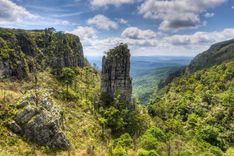
Zululand and the Drakensberg form one of South Africa's most distinctive natural regions, combining rugged mountains, rolling hills and traditional rural landscapes. This area deserves several days on a trip because travel distances are significant and experiences are dispersed across different valleys and reserves.
Travelers typically come here for hiking, panoramic mountain passes and engagement with Zulu cultural life, often linked with nearby wildlife reserves in KwaZulu-Natal. Within a wider South Africa route, Zululand and the Drakensberg usually sit between time on the coast and a safari, offering cooler climates, active days outdoors and quieter, small-town bases.
Why visit Zululand and Drakensberg?
Zululand and the Drakensberg offer an unusually direct encounter with South Africa's Zulu heritage alongside some of its most dramatic mountain scenery. You can walk to ancient San rock art shelters set into cliffs and overhangs, hearing the stories behind the paintings in the very places they were created. High-altitude trails follow escarpment edges past streams and wildflower-filled valleys, with sweeping views that differ markedly from the country's lower, gentler ranges.
In Zululand, historic battlefields such as Isandlwana and Rorke's Drift, rural homesteads and community-led cultural programs reveal how Zulu history is written into the surrounding hills. This close pairing of sacred peaks, rock art, Zulu kingdoms and battlefield landscapes creates a distinctive sense of place that you will not find in other regions of South Africa.

St Lucia, Mission Rocks beach near Cape Vidal in Isimangaliso Wetland Park in Zululand © AdobeStock
Who are Zululand and the Drakensberg best for?
You'll probably enjoy Zululand and the Drakensberg if you like to be outdoors for most of the day and do not mind uneven paths, changeable mountain weather and early starts. Hikers, birders and photographers who relish long views and quiet valleys tend to get the most out of being here, as do road trippers happy with winding drives between scattered lodges and trailheads.
Curious travelers interested in meeting local communities, hearing personal stories and taking part in respectful cultural experiences often find this kind of trip especially rewarding. Families who enjoy active holidays with older children can appreciate the mix of walks, scenic drives and hands-on learning.
You may prefer another destination if you want a beach-first break, nightlife, shopping or a dense choice of restaurants within walking distance. Travelers who dislike long drives, basic rural comforts or cooler evenings might be happier focusing on the KwaZulu-Natal coast, a more resort-based safari area or a city stop instead.
How do Zululand and Drakensberg fit into an itinerary?
Zululand and the Drakensberg usually sit in the middle or latter half of a South Africa route, acting as a transition between coastal KwaZulu-Natal and big-game reserves such as Hluhluwe-iMfolozi or Kruger-area safaris. Rather than a quick stop, it works best as a dedicated leg of your itinerary, giving you time to adjust to cooler temperatures and quieter, rural surroundings after time in cities or on the beach.
Travelers typically arrive by road from Durban, the North Coast or the Midlands, then continue onwards to the battlefields, safari areas or back to Johannesburg. Most tailor-made plans use one or two overnight bases, from which you move out to different valleys and rural districts, instead of changing hotels every night.
Building in at least two to four nights slows the pace of your journey, creating a restorative break with fewer long drives in a row and more flexible days before you move on to your next region.
Trips that include Zululand And Drakensberg
Cape Town, Winelands, and safari in South Africa tour offers a diverse journey through South Africa, beginning with the vibrant culture and stunning landscapes of Cape Town. The itinerary includes a scenic drive along the Panorama Route through the Drakensberg Mountains, where travelers can enjoy breathtaking viewpoints, waterfalls, and unique rock formations.
This trip also features wine tasting in Stellenbosch and thrilling wildlife experiences in Kruger National Park, providing a comprehensive exploration of South Africa's natural and cultural treasures.
A local expert can enhance your journey by incorporating a visit to Bourke’s Luck Potholes in the Drakensberg Mountains.

Drakensberg
How many days do you need?
Given the long distances and spread-out sights, most travelers should plan at least three full days in Zululand and the Drakensberg. This allows time to settle into a rural base, explore one nearby valley, and enjoy a couple of unhurried walks.
With more time, you can add higher-altitude hikes, San rock art visits and drives to different parts of the range without turning every day into a long transfer.
| Days | Recommended focus |
|---|---|
| 2 days | Sample one valley with short walks and scenic drives from a single base. |
| 3-4 days | Mix day hikes, cultural or battlefield visits and relaxed rural time. |
| 5-6 days | Use two bases to explore different sections of the Drakensberg and Zululand. |
| 7+ days | Settle into a slow-paced stay with extended trekking, birding and community experiences. |
A shorter two-night stay can work as a scenic pause between coast and safari, but you will see only a small slice of the region.
Best region combinations
Many travelers pair Zululand and the Drakensberg with Hluhluwe-iMfolozi Park, starting in the mountains before driving 3-4 hours north for Big Five game drives. The cool highlands contrast with warm savanna, and the cultural focus complements wildlife viewing.
Another natural combination is the St Lucia and iSimangaliso Wetland Park area, reached in around 4-5 hours. A route from the Drakensberg to St Lucia gives you hiking and history first, then estuary cruises, beaches and coastal forests.
The KwaZulu-Natal Midlands, roughly 2-3 hours away, works well as a gentle link, with farm stays, craft shops and food stops bridging the shift from cities or airports to higher mountain passes.
Travelers interested in South African history might connect the Drakensberg with the KwaZulu-Natal Battlefields, usually 2-3 hours' drive, weaving together landscapes, stories and memorial sites.
When is the best time to visit Zululand and Drakensberg?
The best time to visit South Africa for Zululand and the Drakensberg is from May to August, when days are cool and clear, visibility is strong, and trails are usually firm underfoot. Nights can be cold, with occasional snow on the highest peaks, so warm layers are essential.
From October to March, the region is warmer and greener, with afternoon thunderstorms more common in the Drakensberg. Hiking remains rewarding, but early starts, waterproof clothing and flexible plans are important because cloud and heavy rain can affect mountain routes and rural roads.
School holidays and long weekends bring more visitors to popular valleys, so small lodges should be booked early. Cooler months suit longer hikes and mountain drives, while hotter periods combine well with coastal stays or safari.

Drakensberg
Experiences to include in Zululand and Drakensberg
The experiences below highlight the most rewarding ways to explore Zululand and the Drakensberg, focusing on time outdoors in valleys, reserves and mountain landscapes rather than traditional sightseeing.
Walk escarpment trails in the uKhahlamba-Drakensberg Park
Spend a full day hiking classic routes in the uKhahlamba-Drakensberg Park, such as the Amphitheatre or Cathedral Peak area, for big panoramas and changing light on basalt cliffs. Paths can be rocky and steep in places, suiting reasonably fit walkers and photographers.
Hike to San rock art sites at Kamberg or Giants Castle
Allow half a day for guided walks from Kamberg Nature Reserve or Giants Castle Game Reserve to view San rock art in protected sandstone overhangs. Trails include uneven sections but reward patient walkers interested in history, symbolism and quieter corners of the Drakensberg.
Explore rolling hills and battlefields around Isandlwana
Combine scenic drives through Zululand's grasslands with guided walks on the Isandlwana and Rorke's Drift battlefields. Allow most of a day to absorb the stories, visit viewpoints and small museums, and appreciate how the terrain shaped the 19th-century Anglo-Zulu War.
Join community-led experiences in the Valley of a Thousand Hills
Spend a half or full day in the Valley of a Thousand Hills, joining community-guided walks between rural homesteads and viewpoints above the Umgeni River. Expect simple facilities and a relaxed pace, best for culturally curious travellers and families with older children.
Look for wildlife in Hluhluwe-iMfolozi Park's hills and valleys
Hluhluwe-iMfolozi Park is one of the top attractions in South Africa for wildlife lovers and keen photographers. Devote at least a full day to self-drive or guided game drives through rolling hills and river valleys where rhino, giraffe and antelope are often seen. Gravel roads can be slow and bumpy, so allow plenty of time and explore at a relaxed pace.
Follow scenic passes through the Midlands Meander
Use a day to wind along backroads and gentle passes of the KwaZulu-Natal Midlands, linking Howick, Nottingham Road and Balgowan. Expect farm stalls, forest patches and views towards the Drakensberg, ideal for slower-paced travelers who enjoy frequent stops and short leg-stretcher walks.

Hluhluwe-iMfolozi Park, South Africa
Planning Zululand and Drakensberg with local expert tips
Combining Zululand with the Drakensberg brings together two very different sides of KwaZulu Natal, from wildlife reserves and rural landscapes to mountain valleys. The distance between them makes the order of the journey important. A local expert can connect both with Durban and the coast while keeping long road days from taking over the itinerary.
Where to stay in Zululand and Drakensberg
In Zululand, accommodation is often chosen around the reserve or wildlife area you plan to explore, with lodge location influencing both game drives and transfer times. The Drakensberg requires a different decision.
Properties are spread across several valleys, and the best base depends on the walks, scenery and mountain areas that interest you. Your local expert can select accommodation on each side of the journey for a clear reason rather than adding several short stays.
Moving between too many lodges may reduce the time available for safari or walking. If wildlife is the stronger priority, for example, your expert can give Zululand an additional night and choose one well placed Drakensberg base from which you can explore without packing again.
How transportation can be arranged
Private road transport works particularly well for linking Zululand and the Drakensberg, since the journey does not follow a simple direct corridor between the two. Your local expert can arrange a driver and divide the route according to your accommodation, planned activities and eventual departure point.
Durban or King Shaka International Airport can serve as the gateway at either end, while a longer KwaZulu Natal itinerary may incorporate the coast as another stage without returning to the city each time. Safari lodge schedules and mountain activities also affect when transfers should leave.
If you finish with a morning game drive in Zululand, your expert can plan the onward journey around that experience rather than forcing an early departure simply to reach the Drakensberg as quickly as possible.