Northern Laos offers a distinct experience from the country’s south, with cooler highland landscapes, slow river valleys, and small towns away from major hubs. It earns a place in a multi-day itinerary if you prefer overland journeys, village stops, and time on the water instead of frequent flights.
Travelers often include it as the quieter, rural stretch between Luang Prabang and Vientiane, or slot it between northern Thailand and Vietnam on longer routes. The region suits those comfortable with basic infrastructure, longer road transfers, and outdoors-focused days rather than classic city sightseeing.
Why visit northern Laos?
Northern Laos offers some of the country’s most intimate encounters with river life and forested mountains, far from the Mekong’s busier stretches to the south. Here you can drift for hours along narrow, green rivers where bamboo houses, misty peaks, and fishermen in wooden boats feel close enough to touch.
Early mornings bring low clouds hanging over the water and the sound of roosters and temple drums echoing from hidden valleys. Small market towns act as gateways to surrounding hills, where footpaths lead to caves once used as wartime shelters, cool forest pools, and villages that still follow seasonal rhythms.
Evenings are unhurried: simple barbecue stalls by the river, a cold Beerlao, and star-filled skies undimmed by city lights. You leave with the sense of having moved at the same slow pace as the rivers and valleys around you.

Kouang Si Falls (Tat Kuang Si Waterfalls) at Luang Prabang, Laos © Artit Wongpradu/Shutterstock
Who is northern Laos best for?
You'll probably enjoy northern Laos if you like unhurried travel, are happy with simple guesthouses, and value quiet evenings over nightlife. Curious, independent travelers who enjoy overland journeys, river trips, and walks between small villages tend to get the most from this region.
It also works well for couples or friends seeking time together in a calm setting, and for repeat visitors to Southeast Asia who have already seen the main city highlights and want a slower, more rural experience.
You may prefer another destination if you want resort-style comfort, short transfer times, and a wide choice of restaurants and shopping. Families with very young children or anyone needing step-free access and predictable schedules might find the infrastructure challenging.
If you are looking for beaches, big-name sights, or a tightly planned program of activities with minimal travel days, other parts of Laos or neighboring countries are likely to be a better match.
How does northern Laos fit into an itinerary?
Northern Laos usually anchors the more remote, overland section of your route, contrasting with time in Luang Prabang, Vientiane, or neighbouring countries' cities. Travelers often approach from northern Thailand or Vietnam, then continue south through Laos, using this region as the quieter, slower chapter between busier hubs. It tends to sit in the middle of a longer journey, once you have adjusted to the region and before you finish with more comfortable stays and easier logistics.
Rather than basing yourself in a single town, you typically move every few nights, following river valleys and mountain roads between small centers. Two to four days here usually fit well within a broader holiday, balancing transport days with full days on the ground.
The flow is often one-way, reducing backtracking and keeping driving hours manageable, so northern Laos feels like a deliberate, immersive stretch of your itinerary rather than a quick side trip.
Trips that include Northern Laos
The Laos luxury tour | Luang Prabang and beyond explores Luang Prabang's royal heritage through the National Museum and temples such as Wat Mai and Wat Xieng Thong. Beyond the city, travelers visit Kuang Si Waterfalls and continue to Nong Khiaw via Pak Ou Caves and Ban Nayang Lue village.
The Laos history tour | Temples, heritage and local culture visits Xieng Khouang's mysterious Plain of Jars before reaching Luang Prabang, where Wat Visoun and other historic sites reveal the region's cultural traditions.
The Luang Prabang culture and nature tour combines visits to Wat Xieng Thong and Pak Ou Caves with time in Ban Xang Hai and Ban Phanom, villages known for their traditional crafts.
In Nong Khiaw, our local experts can include a sunrise visit to Pha Som Nang Viewpoint, offering sweeping views of the surrounding mountains and river valley.
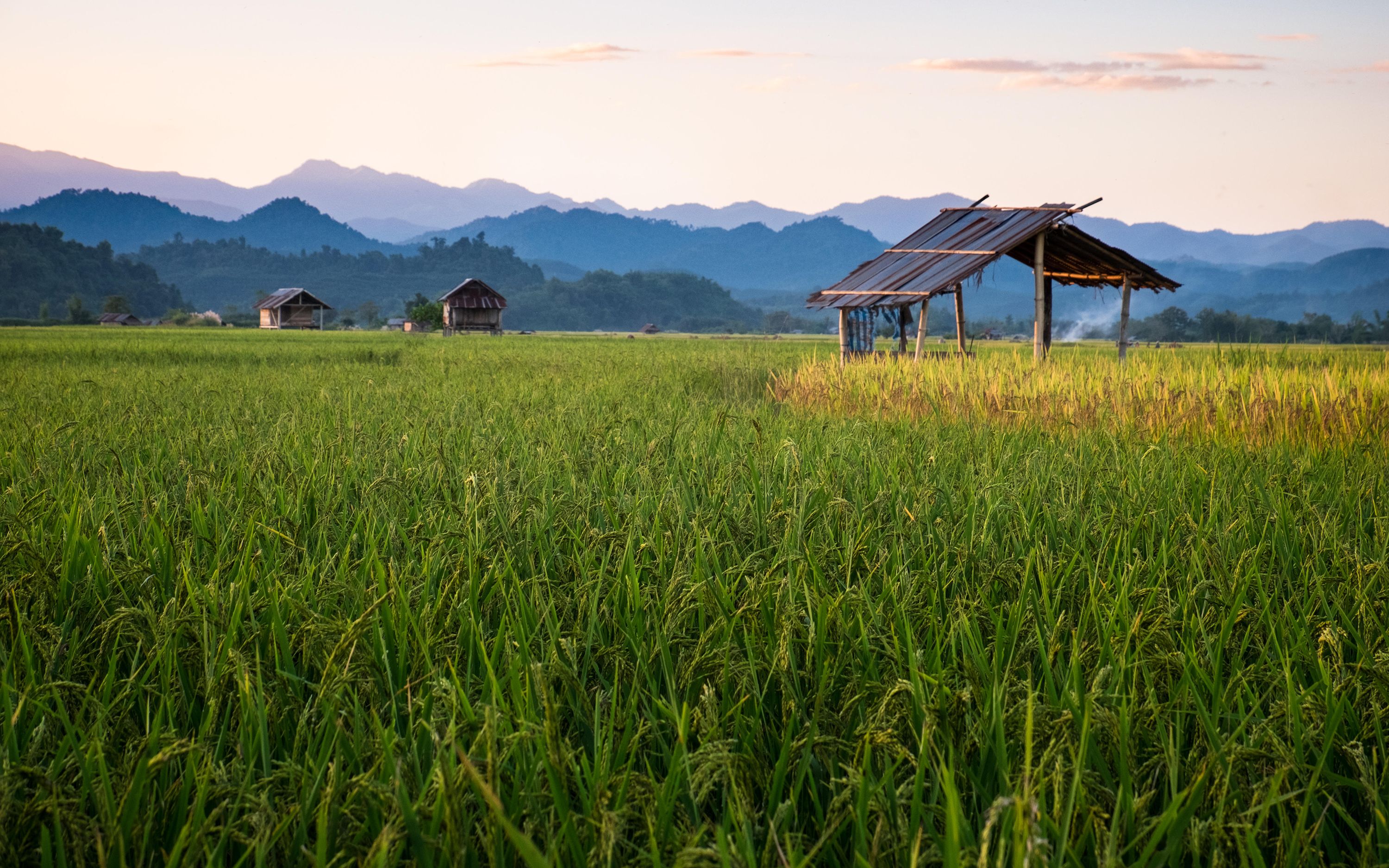
Dusk over the rice paddy fields in Luang Namtha, Northern Laos
How many days do you need?
Travelers usually spend several days moving through northern Laos rather than basing themselves in a single town. With limited flight connections and winding roads, it makes sense to treat the region as a gentle overland route, adding nights as you link river towns, hill villages, and small hubs together.
| Days | Suggested route | Ideal pace |
|---|---|---|
| 2-3 days | One base town with a nearby river trip and village walk | Snapshot of landscape and local life, minimal travel |
| 4-5 days | Two towns linked by river or mountain road, with stops en route | Balanced mix of journey time and relaxed evenings |
| 6-7 days | Multi-stop route through several valleys and small towns | Unhurried travel with time for side trips and rest days |
Each extra day lets you add another stretch of river, market town, or rural walk without turning the trip into a series of long transfers.
Best region combinations
Northern Laos combines well with Luang Prabang, using the city as a soft landing before heading into quieter river valleys and mountain roads. Travelers might spend a few days in town, then continue north by boat or road, which suits couples and friends who like culture followed by slower, rural travel. It also pairs naturally with Vientiane, starting or ending the journey with cafés, temples, and easier logistics before or after more basic overland sections.
For multi-country trips, linking northern Laos with northern Thailand via Chiang Rai or Chiang Khong works well, usually starting in Thailand and crossing into Laos by river. This suits travelers comfortable with simple guesthouses and varied road and boat journeys.
Another option is combining northern Laos with northern Vietnam, for example routing between Hanoi and Luang Prabang, for those interested in contrasting landscapes and village life across borders.
When is the best time to visit northern Laos?
November to February is generally the best time to visit Laos for travelers exploring the north. Cooler, drier weather and clearer skies create comfortable conditions for river journeys, village walks and longer road trips.
March to May is hotter and often hazier, so shorter travel days and more time near rivers or shaded areas can make itineraries more manageable. The rainy season, from June to October, brings greener landscapes and fuller rivers, but road journeys may take longer and some routes can become less reliable.
Seasonal planning may add buffer days, favor towns with stronger infrastructure during wetter months and include more remote road or boat journeys when conditions are drier.

Plain of Jars, Laos
Experiences to include in Northern Laos
Northern Laos combines forested mountains, river valleys and traditional villages shaped by diverse ethnic cultures. Its mix of scenery, cultural encounters and slower travel makes it a rewarding part of a wider Laos itinerary.
Travel the Nam Ou between Muang Khua and Nong Khiaw
Slow boat journeys along the Nam Ou between Muang Khua, Muang Ngoi, and Nong Khiaw reveal steep limestone cliffs, sandy banks, and small riverside villages. Allow one or two days for unhurried travel, short stops, and quiet evenings by the water.
Base yourself in Nong Khiaw for river walks and viewpoints
Using Nong Khiaw as a base lets you combine relaxed evenings on the riverfront with half-day walks to villages and viewpoints like Pha Daeng. Spend two or three nights here to balance gentle activity with time to sit, watch the river, and unwind.
Stay in Muang Ngoi for simple village life
Reaching Muang Ngoi by boat brings you to a car-free village of wooden guesthouses, rice fields, and surrounding hills. One or two nights give space for short walks to Tham Kang Cave or nearby hamlets and long, quiet evenings on the riverbank.
Explore hill country around Phongsaly
Far-north Phongsaly rewards the long journey with cool air, tea-growing hills, and multi-day treks to remote villages. It suits experienced, flexible travelers who can spare at least three days for hikes and road time in an area with basic infrastructure.
Combine Luang Namtha with Nam Ha National Protected Area
Luang Namtha works as a starting point for guided walks and river trips into Nam Ha National Protected Area. With two or three days, you can mix easy paddling or hiking, simple overnight stays, and visits to villages that follow local seasonal rhythms.
Follow overland routes via Oudomxay
Oudomxay often acts as a practical overnight stop on overland journeys between Luang Prabang, Luang Namtha, and the Chinese border. Including it in your route keeps long road days manageable and allows for short side trips into nearby valleys.

Wonderful landscape of Nong Khiaw in Laos © taboga/Shutterstock
Planning Northern Laos with local expert tips
Northern Laos combines Luang Prabang and the Mekong with forested mountains, small towns and rural communities reached by a mixture of rail, road and river travel. A local expert can build the journey around a few contrasting stops, using faster connections where available while preserving time for the slower landscapes that give the region its character.
Where to stay in Northern Laos
Luang Prabang is the natural anchor for many northern itineraries, with accommodation in and around its historic center making temples, markets and the Mekong easy to reach. Beyond the city, places such as Nong Khiaw offer a very different setting among limestone mountains and rivers. More remote areas call for simpler accommodation and longer transfers, so adding several rural stops can quickly change the pace of the trip.
Rather than treating Luang Prabang as a base for every excursion, your local expert can include an overnight farther north when the landscape and village experience justify it. If you prefer walking and river scenery to additional city time, they can extend your stay around Nong Khiaw and keep other stops more concise.
How transportation can be arranged
The Laos China Railway has changed travel through parts of northern Laos, providing fast connections between Luang Prabang, Vang Vieng and Vientiane as well as stations farther north.
Road transportation remains essential for mountain towns and rural areas away from the railway, while boats are useful on selected Mekong and tributary routes. Luang Prabang International Airport provides another convenient entry point for the region.
Train tickets, station transfers and road connections should be coordinated because railway stations can lie outside town centers. If your journey enters northern Laos overland and finishes in Luang Prabang, your expert can combine rail and private road transfers in one direction, adapting the final stage around your hotel and onward flight.