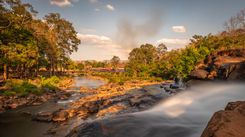
Vientiane, Laos' riverside capital, offers a calmer, more compact experience than the mountainous north or the southern river landscapes. Its mix of low-rise streets, French-era architecture and major temples makes it a logical first or last stop on a multi-day itinerary. Travelers typically come here for a gentle introduction to Laos: manageable traffic, straightforward logistics, and easy access to services and onward transport.
Vientiane works well for culture-focused journeys and short city stays between nature-based stops, especially for visitors who value comfortable hotels and clear infrastructure over remote adventure. It usually pairs with Luang Prabang, Vang Vieng or the 4000 Islands on a wider route.
Why visit Vientiane?
Vientiane reveals how Laos feels in everyday life, rather than on classic sightseeing circuits. Along the Mekong, you can join locals exercising on the riverfront, pausing for iced coffee as freighters move slowly past. Instead of grand boulevards or dense old quarters, you find low-rise streets where golden stupas sit beside weathered shophouses and French-era villas.
Stepping between wats, you notice how temple courtyards double as neighborhood gathering spaces, with monks, schoolchildren, and office workers sharing the same lanes. Evenings linger over simple grilled river fish and cold Beerlao at plastic tables, with the night market humming in the background.
Time here leaves you with a grounded sense of how a small, riverside capital works at its own pace, modest, approachable and closely tuned to the rhythms of the river.
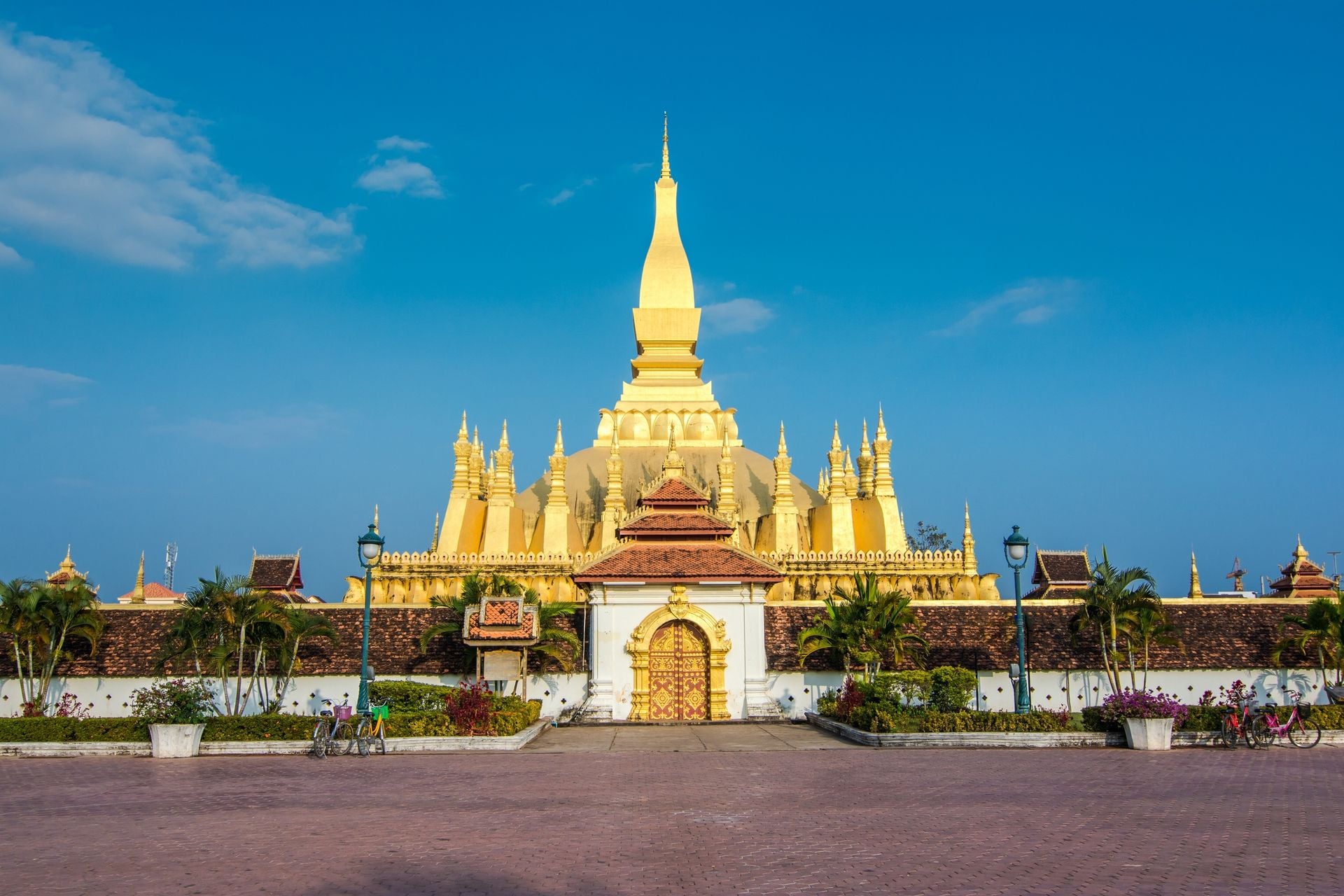
Pha That Luang, 'Great Stupa ', is a gold-covered large Buddhist stupa in the center of Vientiane, Laos
Who is Vientiane best for?
You'll probably enjoy Vientiane if you like gentle city breaks rather than packed sightseeing schedules. It works well for first-time visitors to Laos who want an easy arrival or departure point with straightforward logistics.
Culture-minded travelers who enjoy unhurried temple visits, slow walks, cafés and people-watching tend to get the most from a stay here. Couples often appreciate the relaxed evenings along the riverfront, while solo travelers who prefer safe, low-key destinations may find it a comfortable base between more adventurous stops elsewhere in Laos.
You may prefer another destination if your priority is dramatic landscapes, trekking or immersive rural experiences. Families needing beaches, kids' clubs or theme-park-style attractions will find more choice in other parts of Southeast Asia.
Travelers seeking a dense concentration of historic sites might gravitate toward Luang Prabang, while those looking for high-energy nightlife or a big-city buzz could be happier adding Bangkok or Ho Chi Minh City to their itinerary instead.
How does Vientiane fit into an itinerary?
Vientiane typically bookends a tailor-made trip through Laos, working naturally as either your arrival point or your final stop before flying home or onward within the region. Many travelers spend 2-3 nights here at the start of their route to recover from long-haul flights, sort practicalities and ease into Lao culture before heading on to places such as Luang Prabang or Vang Vieng. Others loop back to the capital at the end of their holiday for a final, slower-paced pause after days spent in more remote or active areas.
The city also functions well as a gentle mid-trip break if your itinerary involves multiple internal journeys. Its compact scale and straightforward logistics mean you can keep transfers simple while still allowing time to catch your breath, refine the next leg of your plans, and shift the rhythm of your journey from busy travel days to more relaxed exploration. It is less commonly used as a long-stay base for extensive day trips.
Trips that include Vientiane
The Laos history tour | Temples, heritage and local culture introduces travelers to Vientiane's historic landmarks, including Wat Sisaket, Ho Phra Keo, Patousay, and the golden That Luang Stupa. A visit to the Morning Market offers a glimpse of local life, while Buddha Park and a sunset stroll along the Mekong add variety to the experience. The journey then continues to the Plain of Jars in Xieng Khouang and Luang Prabang.
At Vientiane's bustling Morning Market, our local experts can introduce you to traditional Lao crafts, regional specialties, and the stories behind them.

Wat Phra That Luang, Vientiane © Gaid Kornsilapa/Shutterstock
How many days do you need?
Most travelers spend 1-3 days in Vientiane, using the city as a gentle pause within a wider Laos journey. A single full day allows you to see a few key temples and enjoy the Mekong riverside at sunset. Two days give space for slower starts, café time and an extra museum or stupa without rushing.
With three days, Vientiane becomes a comfortable base for a food-focused stay or a half-day trip to nearby craft villages or Buddha Park, while still keeping the mood relaxed. Stays of four days or longer suit slow travelers and remote workers who value a steady rhythm between sightseeing and everyday routines.
| Days | Recommended focus |
|---|---|
| 1 day | Core temples, brief Mekong sunset stroll, introductory city walk. |
| 2 days | Unhurried temple visits, cafés, riverfront evenings and one additional museum or stupa. |
| 3 days | Deeper city wandering, food experiences and a half-day trip outside the centre. |
| 4+ days | Slow-travel base between more active regions, suitable for working trips or extended downtime. |
Best region combinations
Vientiane combines naturally with Luang Prabang, Vang Vieng, Pakse and the 4000 Islands, as well as nearby hubs in Thailand and Vietnam. A classic Laos route runs Luang Prabang - Vang Vieng - Vientiane over 7-10 days, using the capital as a softer landing before or after the mountains and karst landscapes.
Adding Pakse and the 4000 Islands after Vientiane creates a longer north-south journey that moves from temples and riverfront evenings to waterfalls and island cycling.
For multi-country trips, Vientiane can follow Bangkok by short flight or connect overland via the Thai-Lao Friendship Bridge, giving a shift from big-city intensity to a slower riverside capital.
Continuing onwards to Hanoi or Ho Chi Minh City by flight turns Vientiane into a calm midpoint on a wider Southeast Asia itinerary.
When is the best time to visit Vientiane?
November to February is generally the best time to visit Laos for travelers exploring Vientiane. Cooler temperatures and lower humidity make riverside walks, temple visits and outdoor sightseeing more comfortable.
March to May brings greater heat and haze, so shorter sightseeing days, cafe breaks and air-conditioned museums help keep itineraries manageable. From June to October, frequent but often brief showers leave time for sightseeing between periods of rain, while the Mekong riverfront becomes especially green.
Seasonal planning may pair Vientiane with cooler northern regions during the dry season, add more indoor visits during hotter or wetter hours and favor shaded neighborhoods or riverfront areas according to the conditions.

Temple Wat Mixai, Vientiane, Laos @ Shutterstock
Experiences to include in Vientiane
Vientiane’s appeal lies in gentle, real-life experiences rather than headline sights. Focus your time on slow cultural walks, Mekong evenings, simple food adventures and one or two well-chosen excursions that complement the rest of your Laos journey.
Follow a slow cultural walking route between central temples
Link That Dam, Wat Si Saket and Haw Phra Kaew on foot to understand Vientiane’s layered history at an easy pace. Allow half a day with café stops. This suits travelers who prefer unhurried urban exploration over long temple checklists.
Stroll the Mekong riverside and night market at sunset
Evenings along Chao Anouvong Park and the Mekong riverside walkway show Vientiane at its most relaxed, with locals exercising, socializing and browsing the Vientiane Night Market. Spend a couple of hours here to unwind between more intensive travel days.
Sample simple Lao dishes at Ban Anou and surrounding food streets
Ban Anou Night Market and nearby food streets offer approachable introductions to Lao dishes, from laap to grilled river fish. Allow an evening to graze, watch local routines and get confident with Lao flavors before heading to smaller towns.
Climb Patuxai and wander the surrounding boulevards
Patuxai, Vientiane’s triumphal arch, anchors a broad, walkable area of government buildings and shady avenues. Climb to the viewing level for a soft city panorama, then allow an hour or two to wander and appreciate the capital’s low-rise scale.
Take a half-day excursion to Buddha Park (Xieng Khuan)
Buddha Park is one of the top attractions in Laos for an easy excursion beyond central Vientiane. Allow half a day, including travel, to explore its surreal concrete sculptures beside the Mekong. The trip suits travelers looking for a light, accessible break from sightseeing in the compact city center.
Visit COPE Visitor Centre for contemporary context
The COPE Visitor Centre near Pha That Luang provides thoughtful insight into Laos’ recent history and ongoing rehabilitation work. An hour or two here adds depth and context to temple visits, especially for travelers pairing Laos with neighboring countries on a wider route.
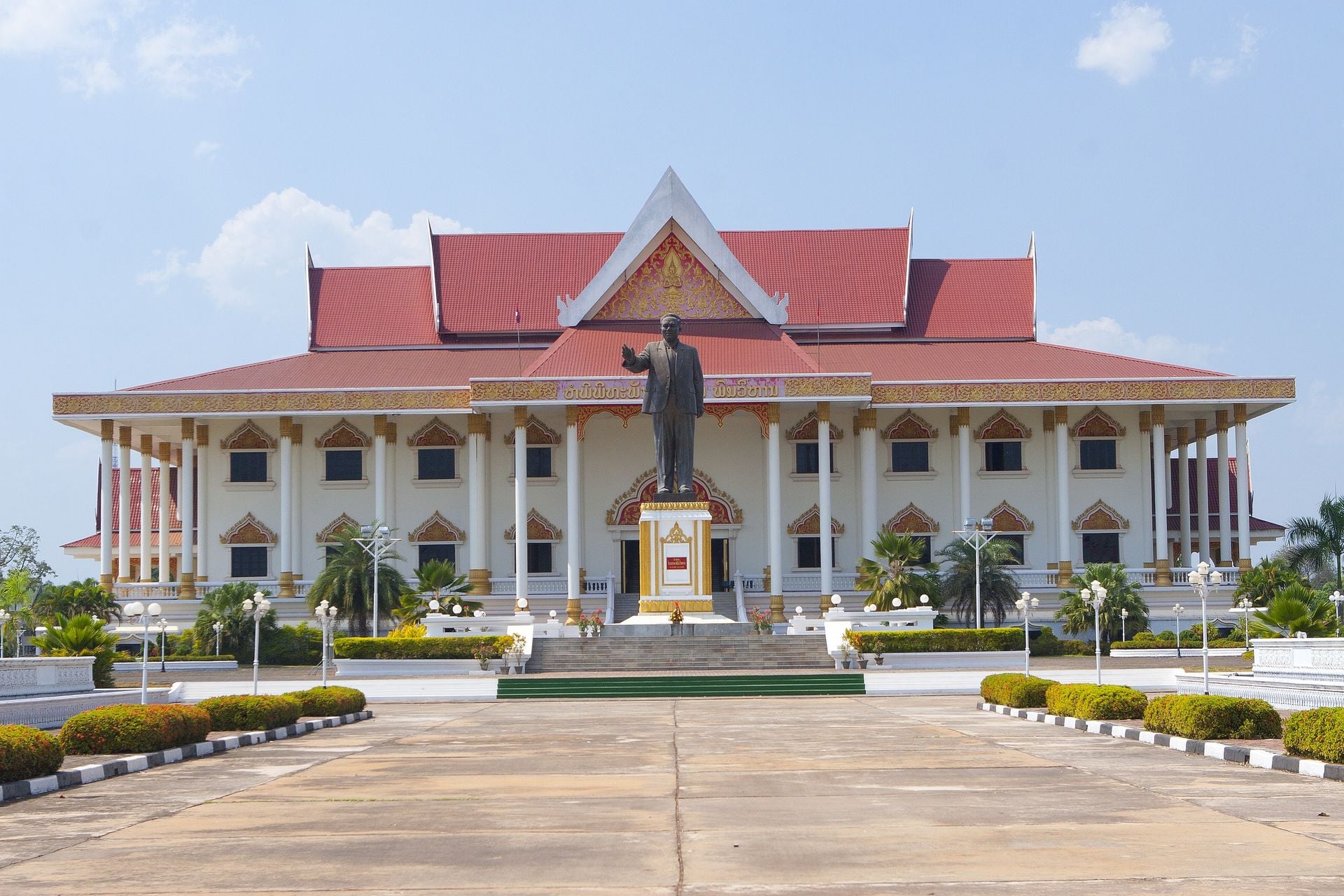
Monument in Vientiane Laos
Planning Vientiane with local expert tips
Vientiane has a relaxed scale for a national capital, with temples, markets and riverside areas spread across a relatively manageable center beside the Mekong. Travel specialists can keep your stay compact, fitting the city naturally between northern Laos, southern destinations or an onward journey across the Thai border.
Where to stay in Vientiane
The central area near the Mekong is convenient for restaurants, evening walks and many of Vientiane’s principal sights. Staying around the historic center also makes it easier to reach temples such as Wat Sisaket and explore nearby streets without relying on transportation for every journey.
Hotels farther from the river may offer quieter surroundings or more space, but the advantage is limited if most of your plans remain central. Vientiane generally works well with one base and does not require a complicated hotel strategy. Your local expert can choose accommodation according to your arrival and departure plans as well as sightseeing.
If Laos’s rural landscapes and historic towns are your priorities, they can keep the capital stay concise and give that extra time to Luang Prabang or another regional stop.
How transportation can be arranged
Vientiane is an important transport hub, with Wattay International Airport serving regional and domestic routes and the Laos China Railway providing fast connections toward Vang Vieng and Luang Prabang. The railway station lies outside the central area, so a dedicated transfer should be planned around your train time.
Private transportation is useful for places beyond the center, while much of central Vientiane can be explored with short road journeys and walking. The city is also close to the Thai border, with onward connections toward Nong Khai and northeastern Thailand.
If Vientiane is your final stop in Laos, your expert can coordinate your hotel departure with your flight, train or border transfer and shape your last day around the connection you actually need.