Polonnaruwa is Sri Lanka's main inland heritage stop, valued for its compact concentration of well-preserved medieval ruins, statues, and temples. It suits travelers who want efficient sightseeing without complex logistics, as most key sites lie within a manageable archaeological park, easily explored by bike, tuk-tuk, or car.
Polonnaruwa works best as a one- or two-night base within a wider Sri Lanka itinerary. Staying overnight lets you visit the ruins in the cooler early morning or late afternoon and combine them with nearby reservoirs or wildlife areas, instead of compressing everything into a rushed day trip.
Why visit Polonnaruwa?
Polonnaruwa offers a rare feeling of exploring a largely intact royal city where religious, political, and hydraulic engineering achievements sit side by side. Within a compact circuit, you see how grand monasteries, audience halls, and vast reservoirs were deliberately arranged to manage water and ritual on a monumental scale.
Nowhere else in Sri Lanka combines such finely carved rock Buddhas, carefully planned processional spaces, and a still-functioning tank like Parakrama Samudra in one coherent landscape. Spending focused time here lets you read the city almost like a blueprint of medieval power and devotion, rather than a scattering of isolated monuments.
You leave with a concrete sense of how control of water, faith, and ceremony were physically built into the capital, something that deepens your understanding of the whole Cultural Triangle.
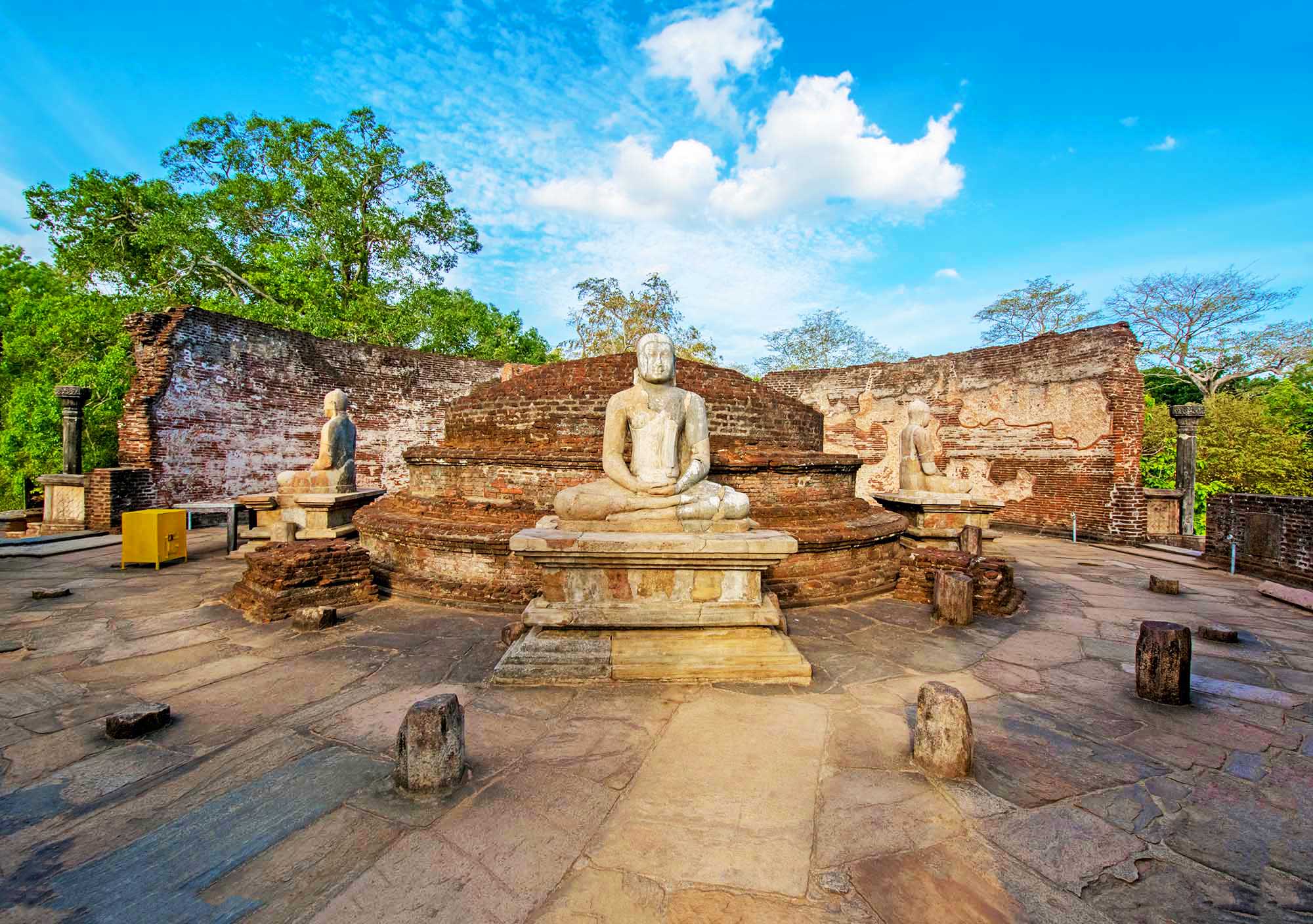
Polonnaruwa is the second most ancient of Sri Lanka's kingdoms @ Shutterstock
Who is Polonnaruwa best for?
You’ll probably enjoy Polonnaruwa if you’re curious about history and like having lots to see in a compact area. Culture-focused travelers, photographers, and detail-oriented explorers tend to get the most out of time here, especially if they prefer a gentle pace over rushing between sights.
Couples and solo travelers who enjoy quiet evenings and low-key guesthouses often find it a relaxing base. Families with older children who can cope with heat and walking usually appreciate the sense of discovery; with younger kids, a short visit combined with pool time often works better.
You may prefer another destination if you want lively nightlife, beach time, or a wide choice of restaurants and bars right on your doorstep. Travelers who dislike hot, outdoor sightseeing or who prefer more resort-style stays may be happier limiting Polonnaruwa to a focused day trip, treating it as one cultural stop within a wider Sri Lanka itinerary rather than an overnight base.
How does Polonnaruwa fit into an itinerary?
Polonnaruwa usually sits in the middle of a Sri Lanka trip, breaking up travel between the Cultural Triangle and the east coast or hill country. Many travelers come here after Sigiriya, Dambulla, or Kandy, using it as a calmer stop between longer transfers. It works as a day trip from nearby bases, but one or two nights makes it easier to schedule sightseeing in cooler hours and avoid cramming too much into a single day.
Adding Polonnaruwa generally slows the rhythm of your route, with fewer hotel moves and a clear block of time dedicated to one compact region. From here, your itinerary often continues to Trincomalee or Pasikuda for beach time, or south towards the Knuckles, Kandy, or tea country.
Longer drives are typically placed before or after this stop, so Polonnaruwa acts as a pivot point that spaces out road time and keeps the flow of your journey manageable.
Trips that include Polonnaruwa
The best of Sri Lanka trip explores Polonnaruwa's ancient Royal Palace, Gal Vihara's rock-carved Buddhas, Audience Hall, and Lotus Bath before continuing to Kandy and the beaches of Koggala.
The Sri Lanka highlights tour | Best of Sri Lanka visits the Royal Palace, Gal Viharaya, Lotus Bath, and statue of King Parakramabahu, with later stops in Kandy and Nuwara Eliya.
The Amazing Sri Lanka trip combines a walk among Polonnaruwa's ruins, including Gal Vihara and Parakrama Samudra, with an afternoon safari in Minneriya National Park to look for elephants, langurs, sambar deer, and waterbirds.
Polonnaruwa's extensive ruins reward a slower visit, and our local experts can allow extra time at the Royal Palace and Gal Vihara to explore their history and intricate stonework.
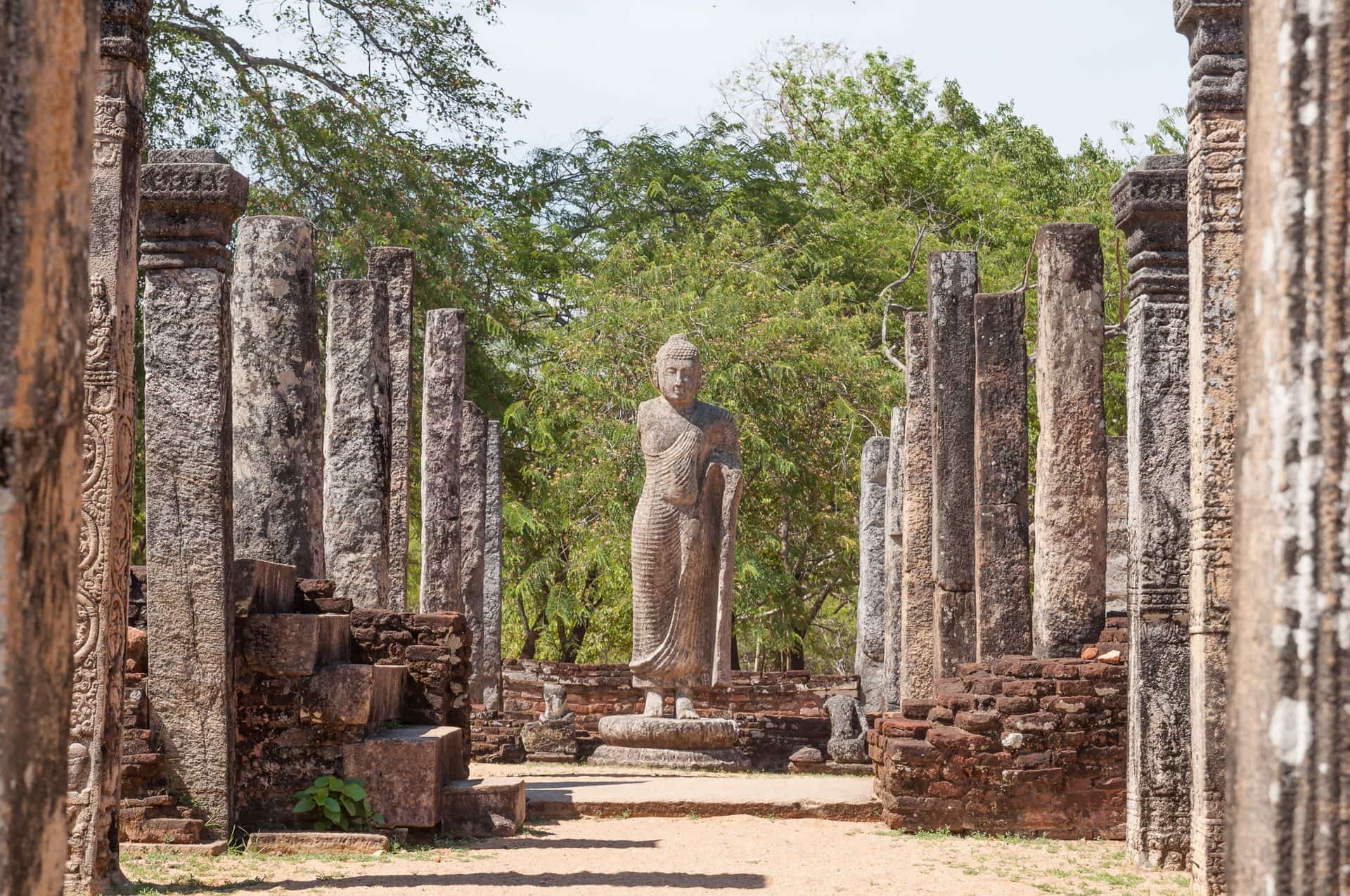
Atadage in the ancient city of Polonnaruwa, Sri Lanka. The Atadage was built by King Vijayabahu I to house the sacred tooth relic.
How many days do you need?
Most travelers find one full day and a single night in Polonnaruwa enough to see the key ruins at an unhurried pace. Those who like to move quickly can manage a focused visit in half a day, but this leaves little time for quieter corners or museum stops.
Staying two nights suits travelers who want cooler early-morning and late-afternoon explorations, with a rest by midday or a side trip to nearby reservoirs or wildlife areas.
| Time | Recommended focus |
|---|---|
| Half day | Express circuit of the main palace complex and famous Buddha statues. |
| One day | Balanced loop by bike or tuk-tuk, plus select smaller shrines. |
| One night | Sunset or sunrise at the ruins, with a quieter evening in town. |
| Two nights | Slow sightseeing, museum visit, and time for nearby tanks or nature. |
Extra time mainly buys you gentler pacing, cooler visiting hours, and space to notice details you might otherwise hurry past.
Best region combinations
Polonnaruwa combines naturally with Sigiriya and Dambulla, forming a compact Cultural Triangle loop. A common route is Sigiriya or Dambulla - Polonnaruwa - Kandy, with drives of around 1.5-3.5 hours between each stop and Polonnaruwa as a one- or two-night cultural base.
To add beaches, many itineraries run Kandy - Polonnaruwa - Pasikuda or Trincomalee in about 3-5 hours total driving, using Polonnaruwa as a short inland stop before or after the coast.
For more nature, you can travel from Polonnaruwa south towards the Knuckles Range or Mahiyanganaya, treating the ruins as a historical pause between hill-country walks.
Local experts typically position Polonnaruwa mid-route, so you arrive when you are ready for slower sightseeing rather than at the very start or end of a busy trip.
When is the best time to visit Polonnaruwa?
May to September is generally the best time to visit Sri Lanka for travelers exploring Polonnaruwa, with relatively dry, sunny conditions across the region. Early-morning and late-afternoon visits are most comfortable, particularly in March and April when temperatures are at their highest.
From October to January, heavier showers are more frequent, but visitor numbers fall, and the ruins can feel especially atmospheric between rain spells. February often provides a good balance of warm weather, clear light and moderate crowds.
Pidurangala
Experiences to include in Polonnaruwa
These experiences capture the most rewarding ways to spend limited time in Polonnaruwa, adding depth and variety to a wider Sri Lanka itinerary without overloading your schedule.
Cycle the main Polonnaruwa Archaeological Park
Exploring the Polonnaruwa Archaeological Park by bicycle links the Royal Palace area, Quadrangle, and Gal Vihara in a single, coherent circuit. Allow around half a day, easily combined with a simple lunch and one or two shorter nearby stops.
Contemplate the Buddha images at Gal Vihara
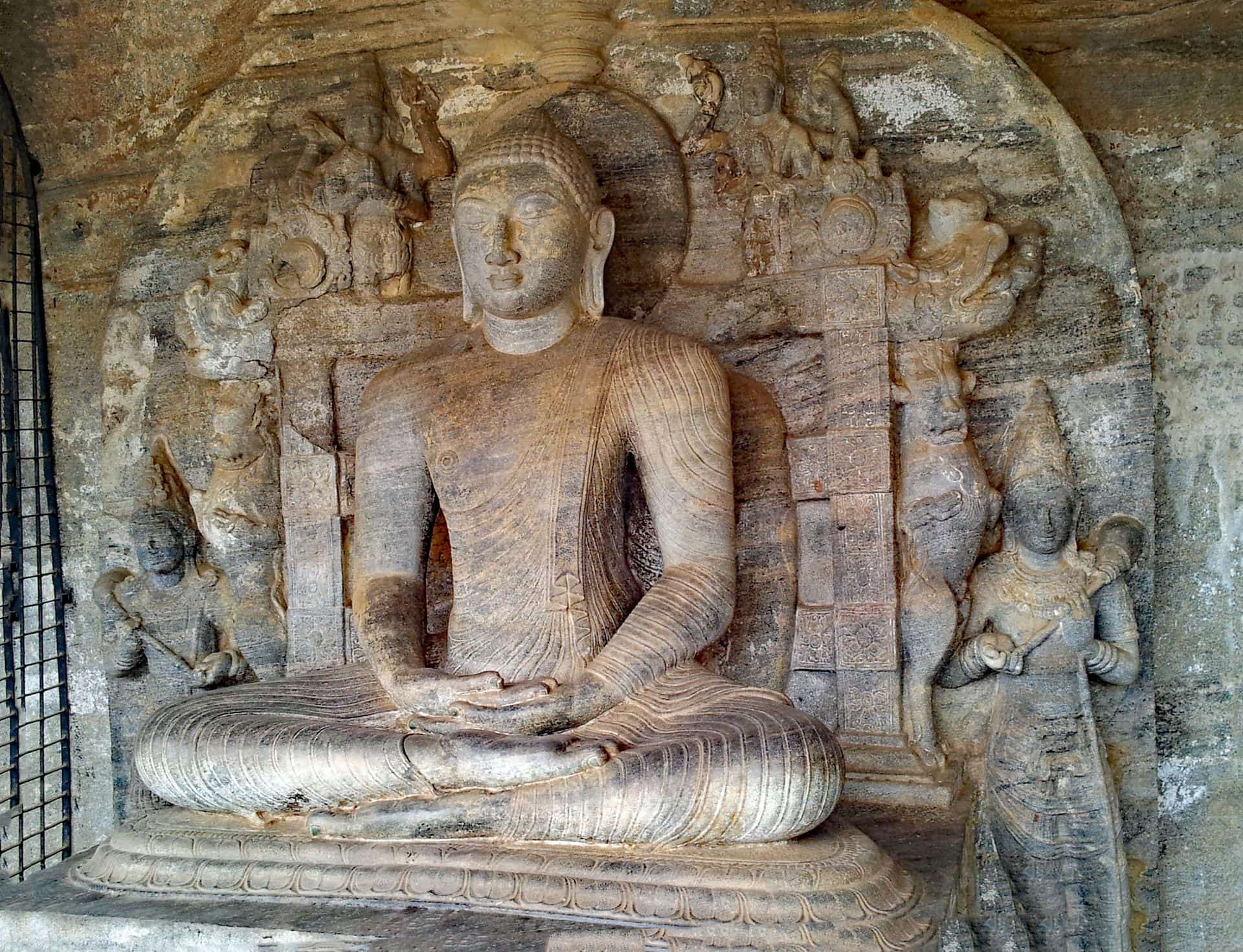
Gal Vihara ranks among the top attractions in Sri Lanka, with its standing, seated and reclining Buddha figures forming Polonnaruwa’s most impressive artistic highlight. Allow one to two hours, ideally in the late afternoon, and combine the visit with nearby Lankatilaka Vihara.
Wander the sacred Quadrangle shrines
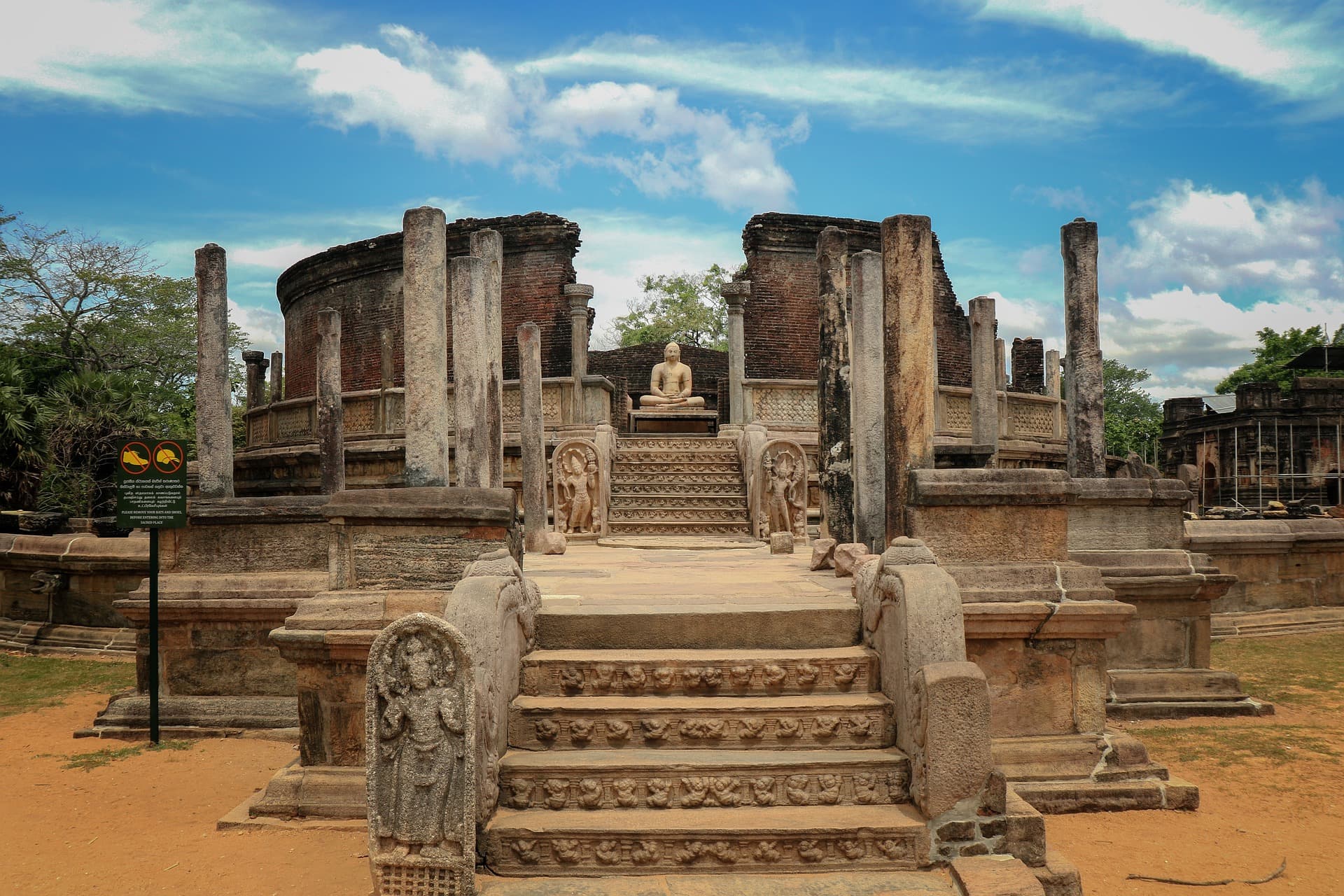
The compact Quadrangle, with Vatadage, Nissanka Latha Mandapaya, and Thuparama, concentrates Polonnaruwa's ritual heart in a tight cluster. Allow one to two hours, folding it into the same half-day loop that includes the Royal Palace complex and surrounding ruins.
Sunset by Parakrama Samudra
Watching evening light over the vast Parakrama Samudra reservoir shows how ancient water management shaped the city and its fields. Reserve one to two unhurried hours near sunset; it combines well with a morning or midday ruins circuit earlier the same day.
Explore Rankoth Vehera and Kiri Vihara
Rankoth Vehera and nearby Kiri Vihara showcase Polonnaruwa's monumental stupas in a quieter corner of the archaeological zone. Allow one to two hours here, ideally after the central ruins, rounding out a full-day tuk-tuk or cycling circuit through the park.
Visit the Archaeological Museum of Polonnaruwa
The Archaeological Museum of Polonnaruwa adds clear context to scattered ruins with models, inscriptions, and sculpture. Spend one to two hours, often in midday heat or rainy spells, pairing it with short field visits to the adjacent Royal Palace complex or Parakrama Samudra.
Polonnaruwa
Planning Polonnaruwa with local expert tips
Polonnaruwa is one of Sri Lanka’s great medieval capitals, with royal ruins, temples, monumental Buddha images and ancient reservoirs spread across an extensive archaeological area. Local experts can plan the visit around the sections that interest you most, leaving enough time to explore without treating the ancient city as a quick stop between other Cultural Triangle sights.
Where to stay in Polonnaruwa
Polonnaruwa has accommodation around the modern town and near the archaeological area, but many travelers visit from a base around Habarana or Sigiriya. Staying locally is worthwhile if you want an early start and a slower exploration of the ruins, particularly when archaeology is a major focus of your Sri Lanka journey.
A central Cultural Triangle base, however, can be more convenient when Polonnaruwa is being combined with Sigiriya and Dambulla over a few days. Your local expert can decide whether a separate night here adds enough value to justify another hotel change.
If you prefer fewer transfers, they can arrange Polonnaruwa as a full excursion while preserving additional nights around Sigiriya or for the journey toward Kandy.
How transportation can be arranged
Private road transportation makes Polonnaruwa straightforward to combine with other parts of the Cultural Triangle. Within the archaeological area, bicycles are a popular way to move between groups of ruins, although a vehicle provides greater comfort in hot weather and allows the visit to be adapted more easily to your pace. Walking works best within individual sections rather than between every monument.
Polonnaruwa can also be incorporated into a route continuing toward Sri Lanka’s eastern regions instead of requiring a return to the central triangle. Your expert can arrange the day around your preferred temples and archaeological sites, then coordinate the onward drive to your next base so that sightseeing and travel remain comfortably balanced.